A door sensor can answer one question quickly: was the first-aid box opened? It cannot tell who opened it, what was taken, or whether stock inside actually changed. Trouble starts when an application treats that one signal as though it answered everything.
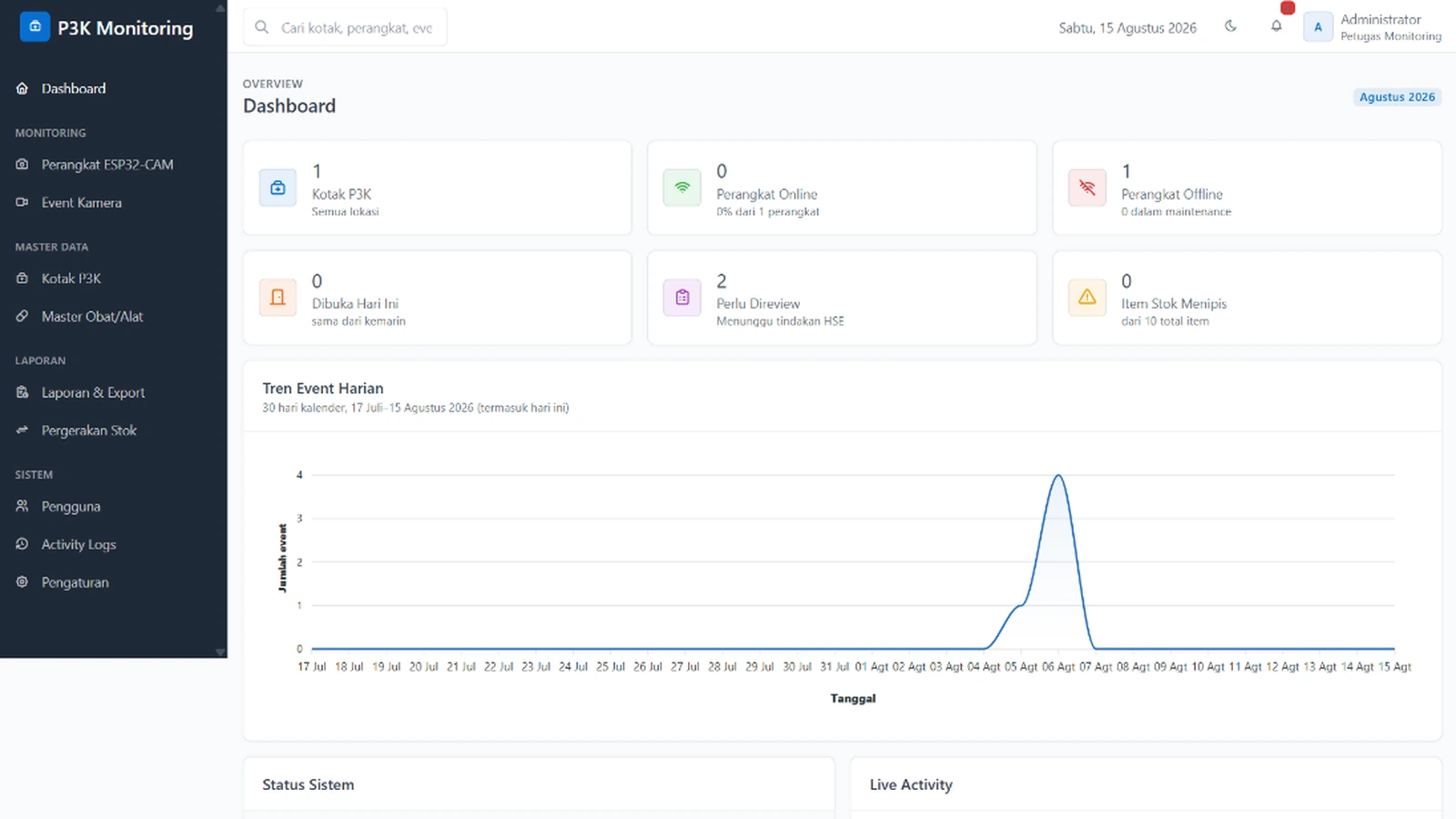
In the IoT first-aid box monitoring system I worked on, a device event, visual evidence, a notification, and the staff review are separate stages. That separation makes the record more honest about what the system knows and what still needs a person to confirm.
The sensor event starts the story
When the box opens, an ESP32-CAM device sends data and visual frames to the application API. Device access to the API is authenticated, and the images are kept in private storage. A queued job can turn frames into a video when FFmpeg is available; frame playback remains a fallback. A Telegram notification tells staff that there is a new event to examine.
This sequence records an opening event, not automatically medical supply usage. Someone might open the box to inspect it, replenish it, or take an item. Reducing stock on the door event alone would make inventory look certain when it was still an assumption.
A notification invites action; it does not state the outcome
Notifications are good at drawing attention. They should say, in effect, “there is an event to review”, not “stock has fallen”. Here, staff examine the visual evidence and record items that are missing if the review warrants it. Only then does a stock movement have a reviewed reason behind it.
The human step is not a failure to automate. It acknowledges what the device can and cannot observe. The sensor handles the repeatable observation; staff make the judgment that needs context.
Visual evidence needs protection as well as playback
Camera frames may contain information that should not be open to everyone. Private storage and access checks matter just as much as the ability to play a clip. A dashboard can show a concise status while detailed visuals remain available to authorized staff reviewing an event.
I also do not want review to depend entirely on one media format. If video generation is unavailable, the received frame sequence can still be viewed. That is not a perfect substitute for video, but it keeps existing evidence usable.
Status should reveal where review stands
A new event differs from one that staff have examined. An examined event with no stock change differs again from one that led to an item adjustment. If all three are labeled “done”, anyone reading the report loses important context.
For a field system like this, I care about a few plain questions: which events await review, who has looked at them, and which stock changes came from the review? Dashboards and PDF or Excel reports become useful only when that trail is clear.
Good automation knows its limits
The device, API, queue, notification, and dashboard make the flow faster. Automation does not have to erase staff judgment. Each step should communicate its level of certainty accurately: the sensor detects, the camera provides evidence, the notification calls for attention, and staff decide what happens next.
The hardware and application flow are shown in the first-aid box monitoring case study.