CASE STUDY
Embedded & Automation 2026
Arduino Uno Automated Paddy Dryer Prototype
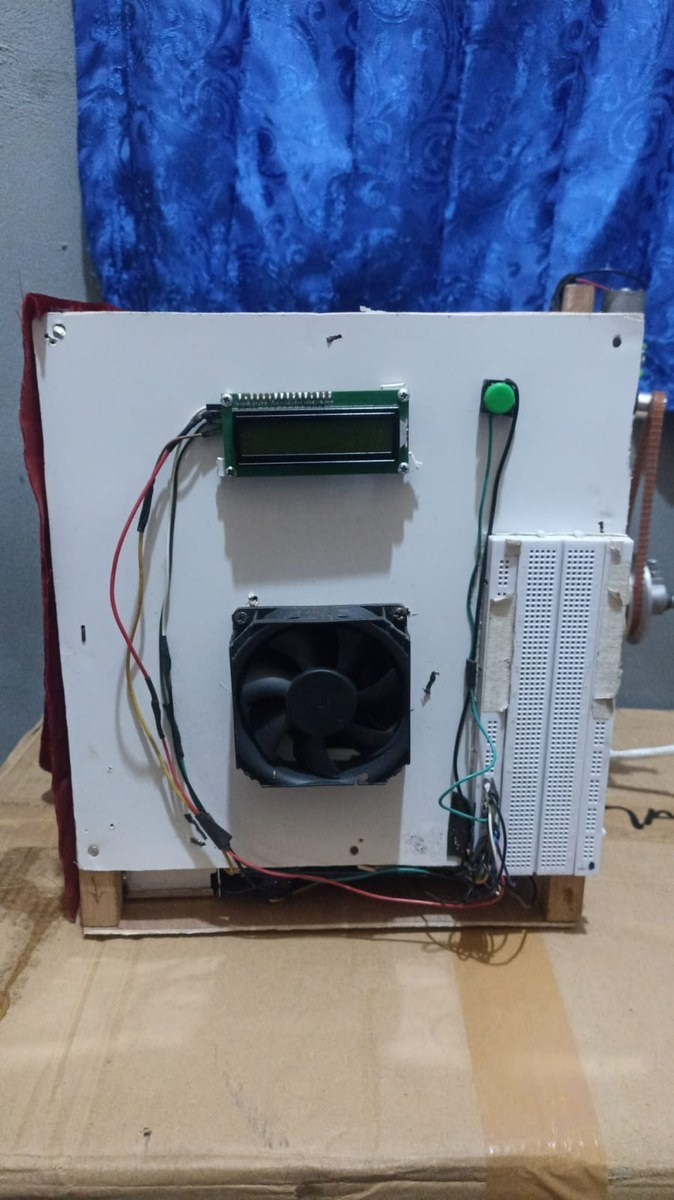
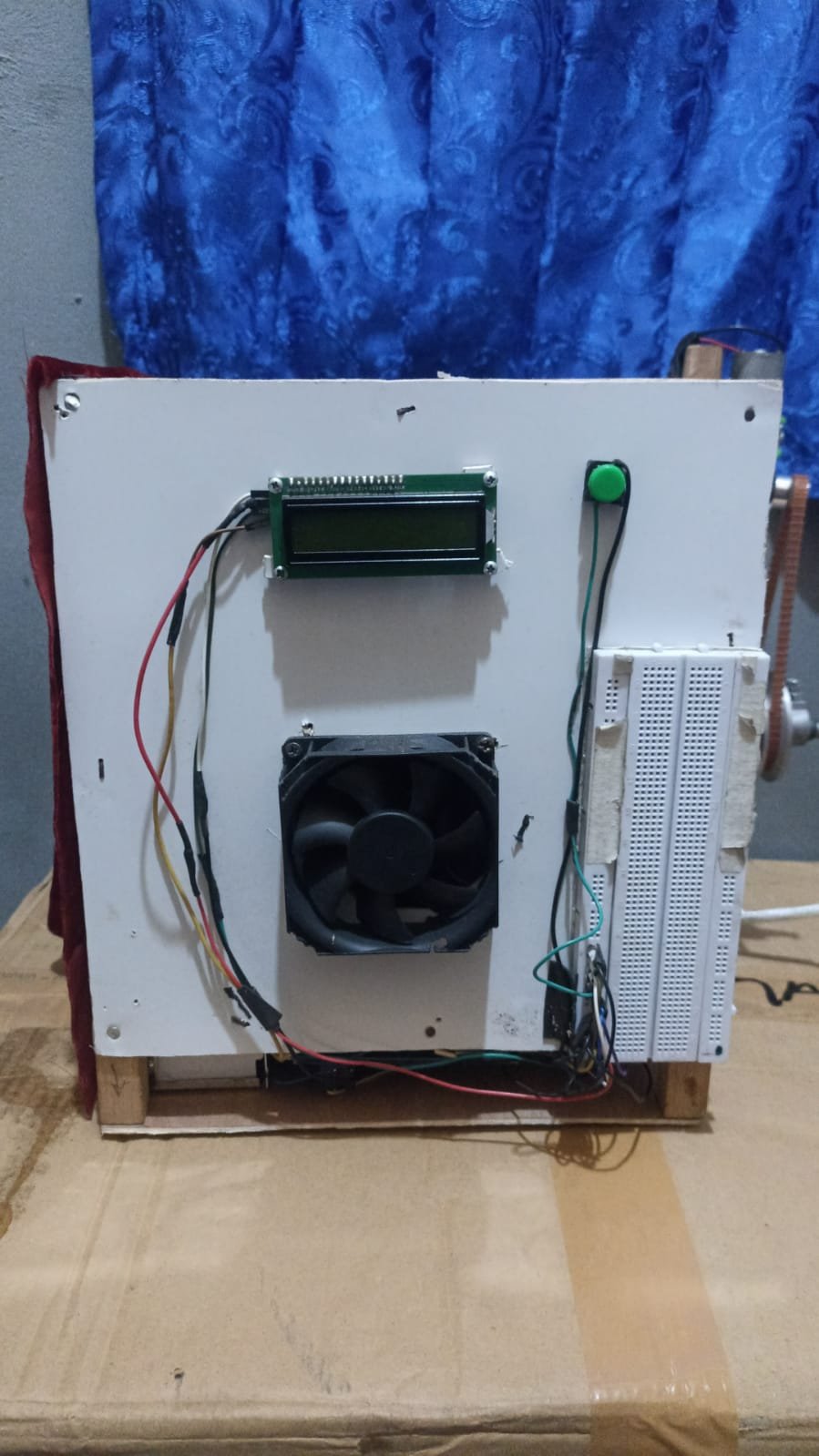
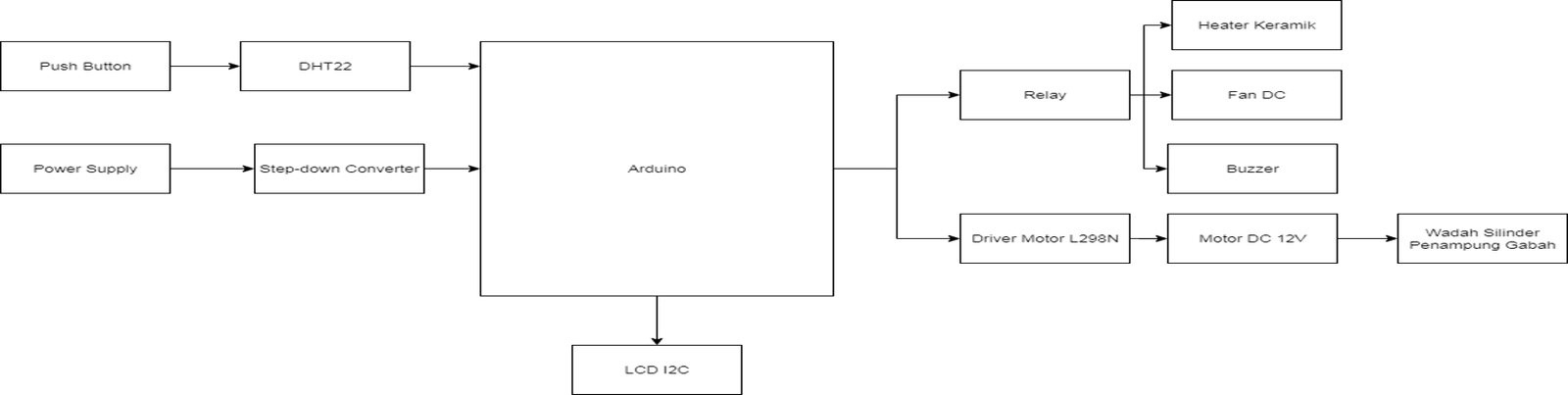
An Arduino Uno paddy dryer prototype. A DHT22 reads the temperature and humidity inside the drying chamber. The firmware controls the heater, fan, rotating drum motor, emergency stop, and over-temperature protection.
TECHNOLOGIES USED
Arduino Uno / C/C++ / DHT22 / I2C / Relay Control / Embedded Systems
PROBLEM
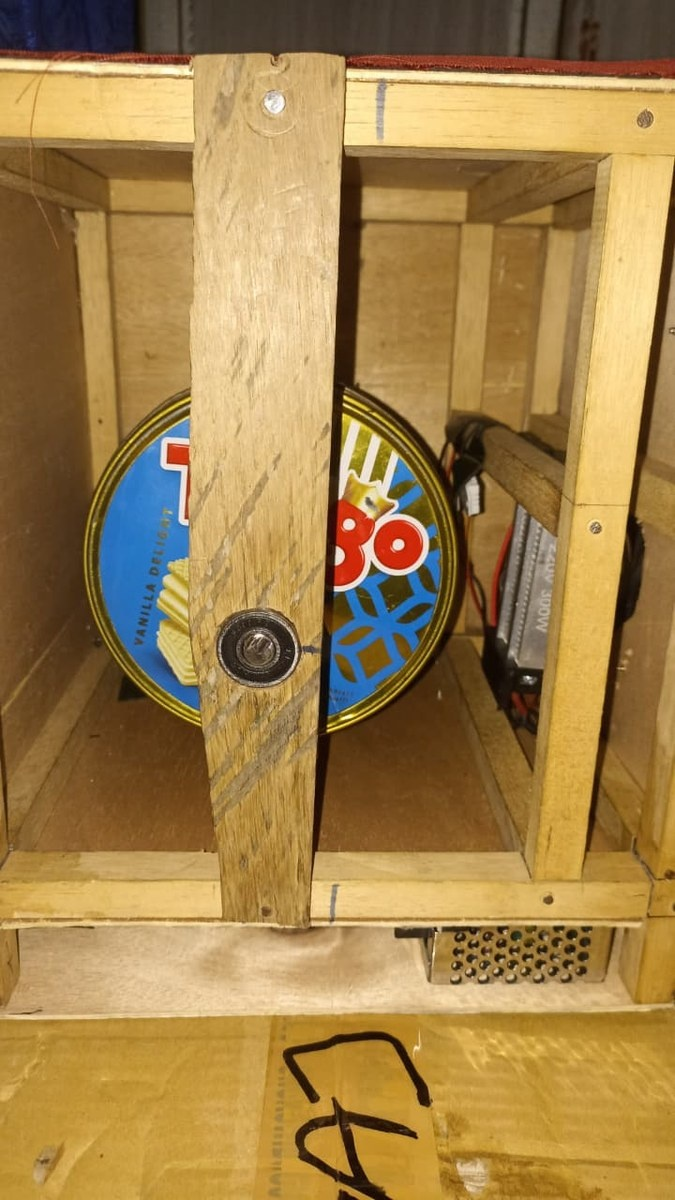
Sun-drying paddy depends on the weather, needs open space, and requires supervision and manual turning. This prototype was built to regulate the drying chamber and keep the paddy moving for more even heat exposure.
MAIN FEATURES
-
01
45–50°C temperature control
The heater switches through hysteresis to avoid rapid temperature cycling.
-
02
DHT22 monitoring
Drying-chamber temperature and relative humidity are sampled periodically.
-
03
Fan & rotating drum
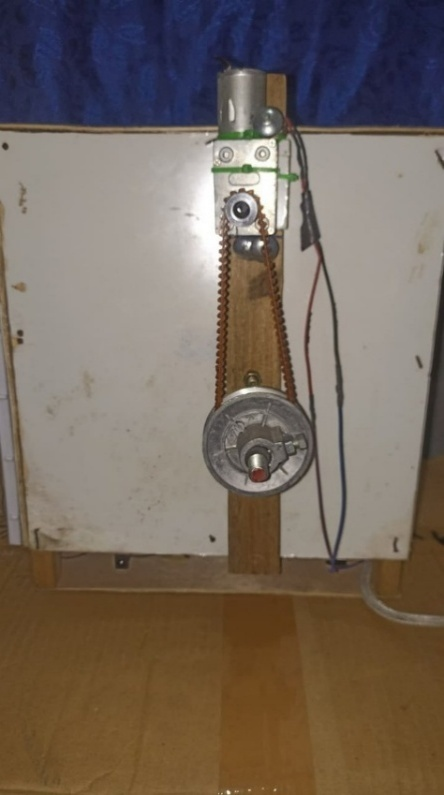
The fan circulates air while the motor rotates the drum during normal operation.
-
04
Unsafe-condition handling
Emergency Stop, sensor failure, and temperatures above 60°C trigger a safety response.
-
05
LCD & Serial logs
Process status appears on the I2C LCD and diagnostic information is available over Serial.
IMPLEMENTATION
The firmware reads the DHT22 periodically and controls the heater, fan, and DC motor through relays. The heater uses hysteresis around 45–50°C, while the fan and motor continue during normal operation. An Emergency Stop, failed sensor reading, or temperature above 60°C moves the actuators into a safer state. An I2C LCD displays process status and Serial provides diagnostic logs.
PROJECT SCREENS
 Open screen 01 at full size
 Open screen 02 at full size
 Open screen 03 at full size
 Open screen 04 at full size
 Open screen 05 at full size
RESULT
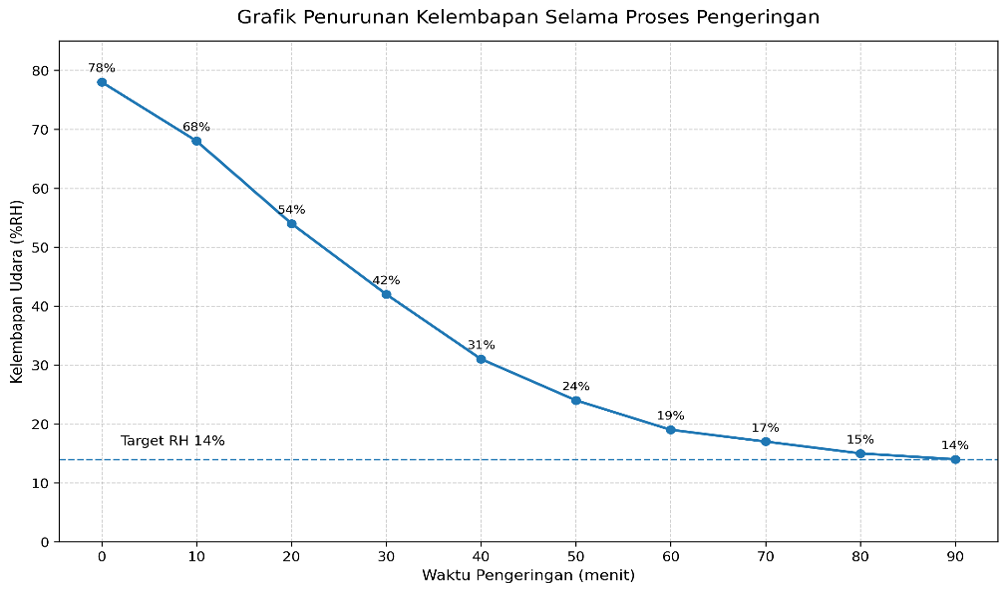
The prototype reads the sensor, controls the heater, runs the fan and drum, shows its status on the LCD, and can be stopped using the emergency button. During a 90-minute drying run with 500 grams of paddy, a moisture meter recorded a change in moisture content from 24.2% to 13.8%. These figures apply to that amount and those conditions.
Need an application for a similar workflow?
Tell me who will use it, how the current process works, and which features are required. I’ll review the requirements before discussing the technical solution.
Talk About a Project